

How To Cope With Rejection Sensitive Dysphoria
Learning to separate feelings from facts

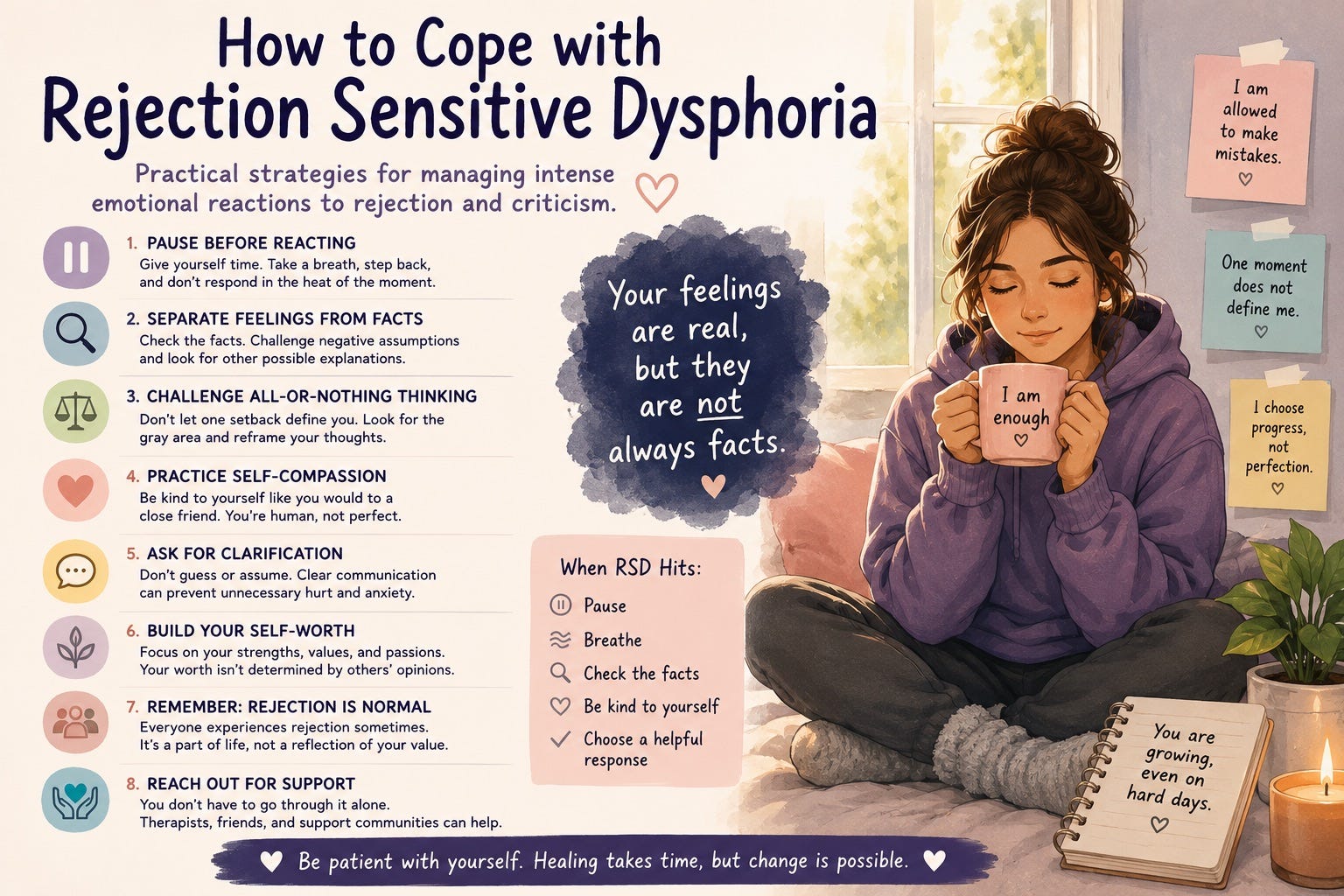
Rejection Sensitive Dysphoria (RSD) is an intense emotional response to perceived or actual rejection, criticism, or failure. Although it is commonly associated with and experienced by those with ADHD, it can also affect many other neurodivergent people. A small comment, unanswered message, or minor mistake can trigger feelings of shame, embarrassment, or the belief that you’ve let someone down.
If you experience RSD, you’re not “too sensitive.” Your brain is reacting to situations that make you feel anxious or overwhelmed. Luckily, many strategies can help you manage those reactions.
Pause Before Reacting
RSD can make emotions feel immediate and overwhelming. Before responding to a text, email, or conversation, give yourself time to pause. Taking a few minutes, or even a few hours if possible, can give you time to think before reacting emotionally.
Separate Feelings From Facts
When RSD is triggered, it’s easy to assume the worst. Instead of assuming someone must be angry with you, ask yourself: “What evidence do I actually have?, “Is there another explanation?” “Am I assuming what someone else is thinking?”
Often, there are many possible explanations that have nothing to do with you.
Challenge All-or-Nothing Thinking
RSD often turns small setbacks into sweeping conclusions. Instead of: “I made one mistake, so I’m terrible at my job.” Try: “I made a mistake. Everyone does, and I can learn from it.”
Replacing extreme thoughts with balanced ones can reduce the emotional impact.
Practice Self-Compassion
Speak to yourself the way you would speak to a family member or close friend. Most of us would never criticize someone we care about as harshly as we criticize ourselves.
Being kind to yourself doesn’t mean ignoring mistakes–it means recognizing that mistakes are part of being human.
Ask For Clarification
RSD often leads us to fill in the blanks with negative assumptions. If you’re unsure what someone meant, consider asking respectful questions instead of assuming the worst. Clear communication usually prevents unnecessary anxiety.
Build Your Self-Worth Outside Of Other People’s Opinions
It’s part of human nature to care what others think, but your value shouldn’t depend entirely on external approval. Spend time on hobbies, interests, relationships, and personal goals that remind you of your strengths and who you are beyond other people’s opinions.
Remember That Rejection Is Part Of Life
Everyone experiences rejection at one point or another. Job applications get turned down, friendships change, relationships end, and people sometimes misunderstand each other. And if you’re neurodivergent, you may have experienced more rejection than other people.
Rejection may hurt, but it does not define your worth or your future.
Reach Out For Support
If RSD is significantly affecting your relationships, work, or mental health, talking to a therapist can be incredibly helpful. They can teach strategies for managing emotional reactions, challenging unhelpful thoughts, and building confidence over time.
Living with Rejection Sensitive Dysphoria can be exhausting, but it doesn’t have to control your life. With practice, it’s possible to recognize your triggers, respond more calmly, and develop a more balanced view of yourself and your relationships.
Your feelings are real, but they are not always an accurate reflection of reality. Learning to pause, question negative assumptions, and treat yourself with compassion can make RSD much easier to manage.