

How To Support Students With NVLD In School
Practical strategies to help students with nonverbal learning disorder thrive

Students with Nonverbal Learning Disorder (NVLD) are often bright, articulate, and eager to learn. Many have strong verbal skills, excellent vocabularies, and a remarkable ability to memorize facts.
However, these strengths often mask their struggles, and teachers may assume a student is capable of completing a task independently, while the student quietly struggles with subjects like math and gym, which affect visual-spatial reasoning, as well as other areas that affect executive functioning and social communication.
With the right supports in place, students with NVLD can succeed in school. Here are some practical strategies you can use to help, many of which helped me when I was in school.
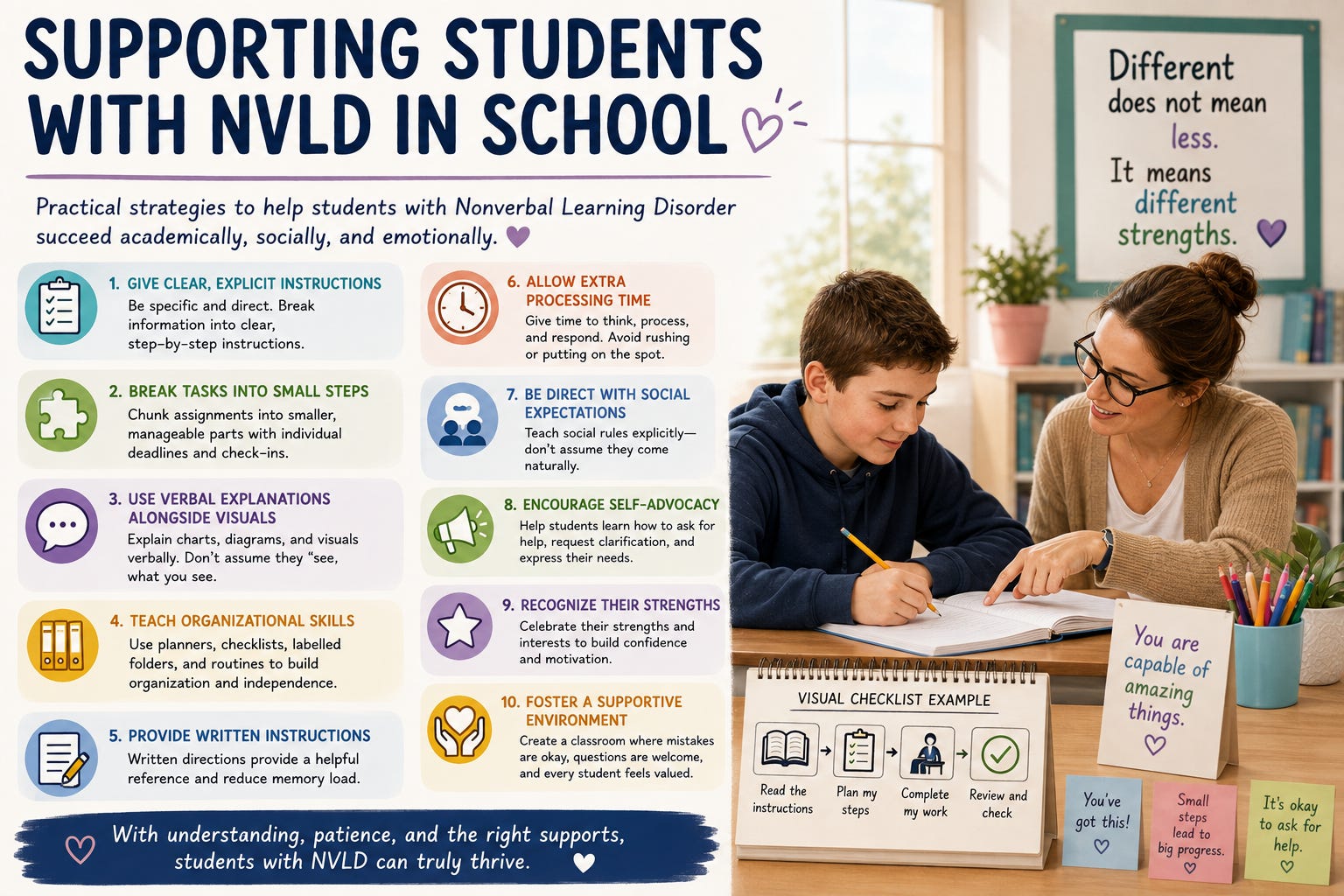
Give Clear, Explicit Instructions
Students with NVLD often struggle to infer expectations or interpret vague directions. Instead of saying or assuming the student will “just do what everyone else is doing,” provide clear, step-by-step instructions and check that the student understands what is expected.
Break Large Assignments Into Smaller Steps
Long-term projects can feel overwhelming because of executive functioning challenges, and the student may not know how or where to start or in what order things should be done. Breaking assignments into smaller tasks with individual deadlines makes them much more manageable and helps students stay on track.
Use Verbal Explanations Alongside Visual Materials
Many students with NVLD learn best through language. When using charts, diagrams, graphs, or demonstrations, explain them verbally and describe the relationships being shown rather than assuming the student will be able to interpret the visual information independently.
Teach Organizational Skills Explicitly
Due to executive functioning challenges, organization doesn’t always come naturally to students with NVLD. Help them develop routines by using color-coded folders, labeled binders, putting labels on where materials should go, and daily organizational check-ins.
Provide Written Instructions
Verbal directions can be easily forgotten, especially when they involve multiple steps or the student has poor working memory. Providing written instructions gives students a reference they can return to whenever they’re unsure or need clarification.
Allow Extra Processing Time
Students with NVLD may have slower processing speed and need additional time to process new information or respond to questions. Avoid rushing them, and allow them to think before expecting an answer. They may also need extra time to complete tests or assignments.
Be Direct With Social Expectations
Many social rules that other students learn intuitively may need to be taught explicitly to the student with NVLD. Discuss classroom expectations, group work etiquette, personal space, tone of voice, and conflict resolution in clear, concrete terms instead of assuming these skills will develop automatically.
Encourage Self-Advocacy
Teach students how to ask questions, request clarification, and communicate when they need help. Learning to advocate for themselves is an extremely important skill that will benefit them throughout school, work, and adulthood.
Recognize Their Strengths
Because many students with NVLD have a lot of challenges, they often feel like they aren’t good at anything, which leads to low self-esteem, speaking from personal experience. However, many of them do have valuable strengths in reading, writing, verbal discussions, vocabulary, creativity, factual knowledge, and problem-solving that relies on language. Recognizing and talking about these strengths helps build confidence and self-esteem.
Foster A Supportive Classroom Environment
Students with NVLD often experience anxiety because they work harder to manage tasks that others may find easy. A classroom where mistakes are treated as learning opportunities, questions are welcomed, and differences in ability are respected can make a huge difference in both academic success and emotional well-being.
Supporting students with NVLD isn’t about lowering expectations–it’s about providing the tools they need to meet those expectations. With patience, understanding, clear communication, and appropriate accommodations, students with NVLD can build confidence, develop independence, and reach their full potential.